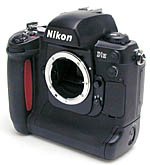
 The D1H was released in July of 2001, alongside Nikon's other then-flagship, the D1X. The D1H had a manufacturer's suggested retail price of $4,500 (the D1X was slightly more expensive, at $5,500). Today, just over seven years later, this same camera can be purchased well-used off of Ebay for the $150-200. This represents a depreciation of around 96%.
Now, given, a seven-year old camera that may have been the workhorse of a press photographer may not be the same quality that it was in 2001. But these cameras were originally designed to be used for hundreds of thousands of activations, built with very rugged components that are stress-tested to last. Compared to today's cameras, the D1H is very much under-powered; a 2.7-megapixel camera providing image sizes of 2,000 x 1,312 pixels. Printed at 300dpi, you're looking at a 5x7 print, but some printers can get away with resolutions as low as half that (150dpi), where now 8x12 prints are no problem. The real advantage to this sensor, something that is becoming apparent now with Nikon's strategy with the FX sensor, is the large size and comparatively few photosites produces very clean high-ISO images. ISO1,600 was a very low-noise, and the camera could be boosted to 3,200 and 6,400 (with an obvious increase of noise).
Perhaps one of the best things related to the release of a new camera is the depreciation effect it has on older models. With the release of the D90, older cameras in the same category have an instant price cut:
| Release date | Camera | MSRP | Current street price | Depreciation |
|---|---|---|---|---|
| August 2008 | D90 | $999 | n/a | n/a |
| September 2006 | D80 | $999 | $600 | 40% |
| May 2005 | D70s | $899 | $300 | 66% |
| March 2004 | D70 | $999 | $250 | 75% |
I don't know if these numbers are in line with cars, but they're certainly enough to make me hold off from buying new. Based on this, a two-year old D700 (provided a replacement comes out to drive down the price) will drop from its current price of $3,299, to just under $2,000. When you factor in taxes on a new purchase that's a savings of $1,750.
Of course, if everyone thought like I did, new cameras wouldn't be as prevalent; the current economy depends on a majority turning over their used camera gear and buying new units.


No comments:
Post a Comment